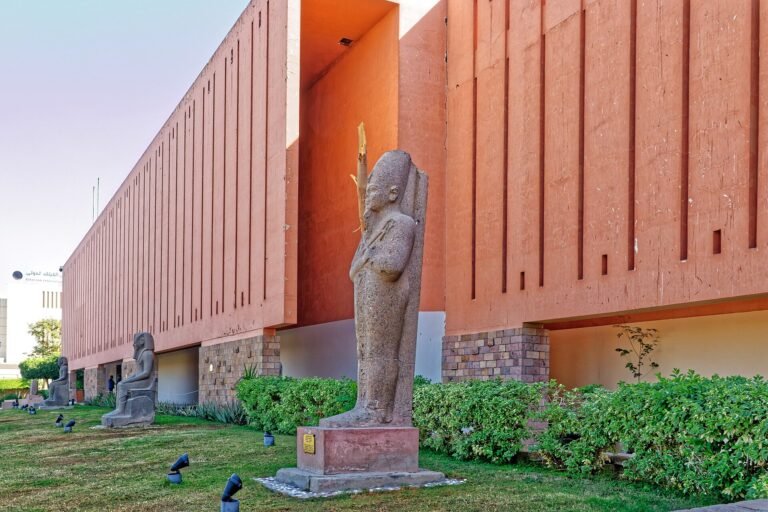
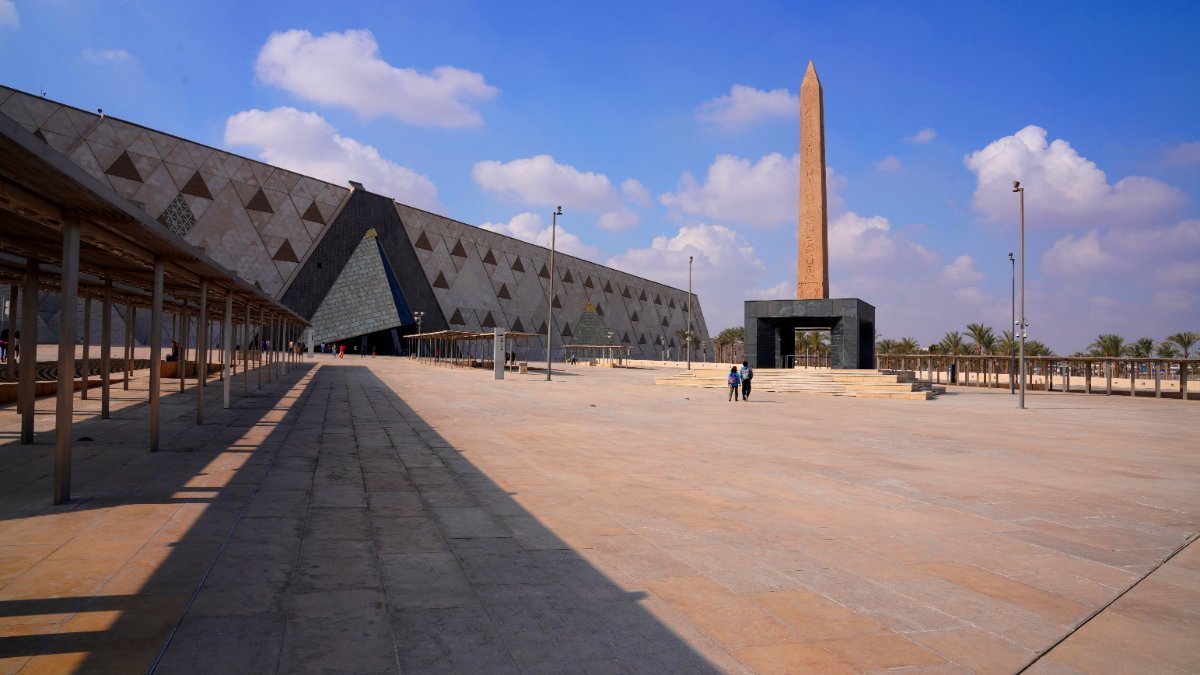
Tucked between the Giza Pyramids and the treasures of Tutankhamun, the Egyptian Museum in Tahrir Square is where Cairo’s ancient and modern history meet. Even with the newer Grand Egyptian Museum now open near the pyramids, the original Tahrir museum remains one of the densest collections of pharaonic artefacts anywhere in the world. Here is what to expect and how to plan your visit.
Why the Egyptian Museum Still Matters
Opened in 1902, the pink neoclassical building in Tahrir Square holds more than 170,000 artefacts spanning five thousand years of Egyptian history, from Predynastic pottery to Greco-Roman mummy portraits. Its most famous holdings are the treasures recovered from the tomb of Tutankhamun in 1922, including the boy king’s solid gold funerary mask.
Highlights You Shouldn’t Miss
- Tutankhamun’s Gold Mask and Sarcophagi: the single most photographed artefact in Egyptian history
- The Royal Mummy Room: a separate paid ticket to see preserved pharaohs including Ramses II and Seti I
- The Narmer Palette: one of the earliest historical documents, recording the unification of Upper and Lower Egypt
- Statues of Amenhotep III and Queen Tiye, among the largest ancient Egyptian statues on display anywhere
- Animal mummies, including cats, crocodiles, and ibises kept as sacred offerings
Egyptian Museum vs. Grand Egyptian Museum
Many of Tutankhamun’s most famous pieces, along with the majority of the Old and Middle Kingdom collection, remain on display in the original Tahrir Square building, while a large share of the young king’s full 5,000-piece tomb collection has moved to the Grand Egyptian Museum near Giza. If your schedule allows only one museum, ask your guide which highlights are currently on display where, since some pieces rotate between the two sites.
Planning Your Visit
- Set aside two to three hours minimum – the collection is enormous and only partially labelled in English
- Hire an Egyptologist guide; unguided visitors often miss the museum’s best stories
- Photography is generally allowed in most halls, but check current rules for the Mummy Room
- Pair the museum with Giza or Old Cairo to make the most of a day in the city
- Arrive early or late afternoon to avoid the midday tour bus rush
Our Cairo & Giza Pyramids Shore Excursion includes a stop at the Egyptian Museum alongside the pyramids and the Sphinx, timed to fit within a single cruise-ship port call. For travellers spending several days in Egypt, the museum also fits naturally into the Cairo leg of our 6-Day Cairo, Luxor & Aswan Tour Package.
Frequently asked questions
How much time do I need at the Egyptian Museum?
Two to three hours covers the highlights with a guide; history enthusiasts can easily spend a full day.
Is Tutankhamun’s mask still in the Tahrir Square museum?
Yes, the golden death mask remains on display at the original Egyptian Museum in Tahrir Square.
Do I need a separate ticket for the Royal Mummy Room?
Yes, viewing the royal mummies requires an additional ticket beyond general admission.
Is the Egyptian Museum suitable for children?
Yes, most children find the mummies and golden treasures fascinating, though a guide helps keep younger visitors engaged.
Can I visit both the Egyptian Museum and the Pyramids in one day?
Yes, this is one of the most popular single-day itineraries in Cairo and is exactly how our shore excursion and day tours are structured.